Showing posts with label Wisdom. Show all posts

Saturday, October 17, 2009

Deepavali Valthukkal to All!


Today, 17 October 2009, is Deepavali, the festival of lights which is observed and celebrated by Hindus, Sikhs, Jains and some Buddhists too. Deepavali (or Diwali) literally means "a row of lamps" in Sanskrit, and lamps play a major role in its celebration, signifying the victory of good over evil, and of light over darkness.

Hindus believe that dharma or righteousness is a central principle by which one lives a good life. We need to ensure that dharma overcomes adharma in ourselves, just as we strive to establish dharma in the world. Here the Supreme Being lends us a hand; as Sri Krishna says in what is possibly the most famous verse in the Bhagavad Gita:
Yada yada hi dharmasya
Glanir bhavati bharata
Abhyutthanam adharmasya
Tadatmanam srjamy aham
- Bhagavad Gita (Chapter IV-7)

In English:

Whenever and wherever there is decay
of righteousness, O Bharata,
And a rise of unrighteousness
then I manifest Myself!
You can listen to the verse in Sanskrit here:

According to Wikipedia, Deepavali celebrates two such events when the Supreme Being manifest himself to reestablish righteousness in the Universe, as Sri Rama and Sri Krishna respectively:
  • Return of Rama to Ayodhya: Diwali also celebrates the return of Rama, King of Ayodhya, with his wife Sita and brother Lakshmana to Ayodhya after a 14 year exile, and a war in which he killed Ravana. It is believed that the people of Ayodhya lit ghee lamps along the way to light their path in the darkness. Since Ram traveled from South India to his kingdom in North India, he passed through the south earlier. This is the reason why the festival is celebrated a day earlier in South India. Diwali usually comes 19 or 20 days after Dasara.
  • The Killing of Narakasura: Celebrated as Narak Chaturdashi, one day before Diwali day, it commemorates the killing of Narakasura, an evil demon who created havoc, by Krishna's wife Satyabhama. This happened in the Dwapara Yuga during this time of Krishna's avatar. In another version, the demon was killed by Krishna.
The significance of Deepavali in Sikhism (from here):
The third Sikh Guru Amar Das started Diwali celebrations by motivating all Sikhs to come together on this day and seek the blessings of the Guru at Goindwal. Another event that marks this festival is that the foundation stone of The Golden Temple at Amritsar was laid on Diwali.

Even though the Sikhs were celebrating Diwali since a long time, its significance increased historically when their revered Guru Hargobind Sahib was released from prison on this day at Gwalior. Hence, Diwali is celebrated as “Bandi Chhorh Diwas”/day of freedom by Sikhs. Emperor Jahangir imprisoned Guru Hargobind Sahib along with 52 other Hindu kings at Gwalior fort as political prisoners. The people pleaded for the release of their Guru and it was granted in October 1619. But, the Guru asked the emperor to release all the other kings along with him, to which he agreed. After the release, the Guru went straight to the Golden Temple at Amritsar and to welcome him there were hundreds of lamps lit in the temple.

During the festival people prepare sweets at home and devotees float multi-colored light candles on the water body around the Golden Temple. Here a grand fireworks display is held in the evening. Sikhs take out Nagar keertan/street procession during Diwali and Akhand paath or nonstop reading of Guru Granth Sahib is held as part of the celebrations. Joyful melas/fairs are also held.
The significance of Deepavali in Jainism (from here):
Diwali is celebrated by Jains with devotion, on this day Lord Mahavira the 24th Thirthankara achieved Nirvana on Amavasya of Ashvina masa in 527 B.C. The Lord left the body and achieved Mukti/liberation in Pavapuri, Bihar. Lighting of lamps on this day acknowledges Lord Mahavira’s preaching and knowledge.

Jains fast on these three days and recite sacred hymns and meditate. They also listen to Uttaradhyavan Sutra, which is the final preaching of Lord Mahavira.

Houses will be elaborately and beautifully decorated with lamps and lights. They also worship Goddess Lakshmi on Amavasya and businessmen open new account. Sweets and savories are prepared and distributed to friends and relatives.
The significance of Deepavali in Buddhism (from here):
Buddhists especially Newar Buddhists celebrate Diwali in their quiet way. They chant the mantras and remember Emperor Ashoka who converted to Buddhism on this day. Hence the Buddhists also know the festival as Ashok Vijayadashami. Their temples and monasteries are well decorated during this time and the Buddha is worshiped with full honors.
In Malaysia, this is how Hindus celebrate Deepavali (from here):
In anticipation of the celebration, homes as well as their surrounding areas are cleaned from top to bottom; decorative designs such as the kolam are drawn or placed on floors and walls; and the glow of lights, whether emitted from the traditional vilakku (oil lamps fashioned out of clay) or colourful electric bulbs, brighten up the abode of both rich and poor, signalling the coming festivities.
Bank of Commerce staff completing their kolam design

Temples are similarly spruced up with flowers and offerings of fruits and coconut milk from devotees, becoming more abundant and pronounced as the big day draws closer.

The spring cleaning and decorating are significant for they not only symbolise renewal but also prepare for the welcoming of Devi Lakshmi, the goddess of Wealth and Prosperity, who is believed to visit homes and temples on the day. It is said she emerged from the churning ocean only days after the new moon of Deepavali.

Besides the cleaning of homes and temples, Hindus also prepare themselves by cleansing their bodies and minds. Many among the devout fast, or observe a strict vegetarian diet, and spend hours during the preceding weeks in prayer and meditation.

The eve is usually spent making last-minute preparations for the next day. This is also the time when past quarrels are forgotten, and forgiveness is extended and granted.

On Deepavali morning, many Hindu devotees awaken before sunrise for the ritual oil bath. For some it is a symbolic affair (to signify purity) while others take full oil baths to remove impurities externally, as well as tone the muscles and nerves to receive positive energies. Then it's straight to the temples where prayers are held in accordance with the ceremonial rites.

The rest of the day is taken up by receiving guests, as is customary here in Malaysia. Most devout Hindus tend to be vegetarian, but that doesn't change the fact that Deepavali is the day to savour the many delicious Indian delicacies such as sweetmeats, rice puddings and the ever-popular murukku.
Yesterday, Barack Obama became the first American President to personally celebrate Deepavali.


Barack Obama lighting a "kuthuvilakku" lamp at the White House yesterday (photo from here). You can see his Divali message on YouTube here.
As he lit the Deepavali lamp, a Hindu priest chanted this verse from Brhadaranyaka Upanishad - I.iii.28:
Asatoma Sadgamaya
Thamaso Maa Jyothir Gamaya
Mrithyor Maa Amrutham Gamaya
In English:
Lead me from Untruth to Truth.
Lead me from darkness to light.
Lead me from death to immortality.
Deepavali valthukkal to all! May the Light shine on us, in us and from us!

Sincerely,
Malaysian Heart

P.S. You can learn more about Hinduism here and here. You can read an English translation of the Bhagavad Gita here.

A very meaningful Ryukyuan folk song: Tinsagu nu Hana (Balsam Flowers)

I happened to hear this Ryukyuan folk song by chance, after following a YouTube link shared by a Facebook friend (you know how one song leads to another, right). The melody immediately caught my ear, and on further googling, the lyrics immediately captured my heart. Here it is, Tinsagu no Hana (Balsam Flowers), sung by Rimi Natsukawa:

Tinsagu nu hana by Rimi Natsukawa


Here are the lyrics translated into English (from here, here and here):

Just as my fingernails are painted with the pigment from the balsam flowers,
my heart is painted with the teachings of my parents.

Although the galaxies in the sky are countable,
the love and wisdom of my parents are not.

Just as the ships that run in the night are guided to safety by the polestar,
I am guided by the parents who birthed me and watch over me.

Just as there's no point in owning splendid jewelry if you don't maintain it,
human beings who maintain their souls will live life wonderfully.

The wishes of he who lives sincerely always come true and he prospers.

You can do anything if you try, but you can't if you don't.


Wonderful, isnt' it? If you'd like to sing along, here are the lyrics in romanised syllables (adapted from here and here):

ti-.n-sa-gu-nu-ha-na-ya ci-mi-za-ci-ni-su-mi-ti,
u.-ya-nu-yu-si-gu-tu-ya ci-mu-ni-su-mi-ri;

ti-.n-nu-bu-ri-bu-si-ya yu-mi-ba-yu-ma-ri-si-ga,
u.-ya-nu-yu-si-gu-tu-ya yu-mi-ya-na-ra-.n;

yu-ru-ha-ra-su-fu-ni-ya ni-nu-fa-bu-si-mi-a.-ti,
wa-.n-na-ce-ru-u.-ya-ya wa-.n-du-mi-a.-ti;

ta-ka-ra-da-ma-ya-ti-.n mi-ga-ka-ni-ba-sa-bi-su,
a.-sa-yu-ci-mu-mi-ga-ci u.-ci-yu-wa-ta-ra;

ma-ku-tu-su-ru-hi-tu-ya a.-tu-ya-i.-ci-ma-di-.n,
u.-mu-gu-tu-.n-ka-na-ti ci-yu-nu-sa-ka-i.,

na-si-ba-na-ni-gu-tu-.n na-i.-ru-ku-tu-ya-si-ga,
na-sa-nu-yu-i.-ka-ra-du na-ra-nu-sa-da-mi,
na-sa-nu-yu-i.-ka-ra-du na-ra-nu-sa-da-mi;

From Wikipedia here:
Tinsagu nu Hana (Okinawan てぃんさぐぬ花 "the Balsam Flowers") is sometimes spelled Tensagu nu Hana. Okinawan children will squeeze the sap from balsam flowers to stain their fingernails. The lyrics of the song are Confucian teachings. Of the six verses, the first three relate to filial piety, while the last three refer to how to respect one's body and one's goals.

Each verse has exactly the same number notes using language and meter devices that are solely Ryukyuan. The English translation tells of the content of the verses but fails to convey the precision and the beauty of the song.
Alas, the best translations are metempsychoses.

Sincerely,
Malaysian Heart

Friday, October 2, 2009

What lessons can Malaysians learn from Mahatma Gandhi and Satyagraha?


Mohandas Karamchand Gandhi
2 October 1869 – 30 January 1948
photo from here

Today, 2 October 2009 is the 140th anniversary of the birth of Mahatma Gandhi. In India it is celebrated as Gandhi Jayanti, and internationally it is celebrated as the International Day of Non-Violence. Besides commemorating the birth of such a human being, what lessons can we learn from his life and struggle, and why would they be of use to us?

In my humble opinion, the Mahatma's greatest achievement was in leading oppressed people to freedom. This is a very difficult undertaking, requiring great courage and ability, physical, intellectual, emotional and moral. The oppressors whom he faced were very powerful and ruled with an iron fist, yet the Mahatma was able to bring about change in a peaceful and ethical way. In a world where "one man's terrorist is another man's freedom fighter", and where the ends are held to have justified the means, the Mahatma stands out as a shining example of how one man can make a difference for the better. As Albert Einstein said of him, "Generations will scarce believe that such a one as this ever in flesh and blood walked upon this earth."

What were the personal characteristics that set the Mahatma apart? I believe that he had a very strong sense of values and principles by which he lived and by which he guided the struggle. Among these principles were (adapted from Wikipedia):
  • Truth: Gandhi dedicated his life to the wider purpose of discovering truth, or Satya. Gandhi summarized his beliefs first when he said "God is Truth". He would later change this statement to "Truth is God". Thus, Satya (Truth) in Gandhi's philosophy is "God".
  • Non-violence: Although Mahatama Gandhi was not the originator of the principle of non-violence, he was the first to apply it in the political field on a huge scale. In his own words, "There are many causes that I am prepared to die for but no causes that I am prepared to kill for."
  • Simplicity: Gandhi earnestly believed that a person involved in social service should lead a simple life. His simplicity began by renouncing the western lifestyle he was leading in South Africa. He called it "reducing himself to zero," which entailed giving up unnecessary expenditure, embracing a simple lifestyle and washing his own clothes.
  • Faith: Gandhi was born a Hindu and practised Hinduism all his life, deriving most of his principles from Hinduism. As a common Hindu, he believed all religions to be equal, and rejected all efforts to convert him to a different faith. Gandhi believed that at the core of every religion was truth and love (compassion, nonviolence and the Golden Rule). He also questioned what he saw as hypocrisy, malpractices, and dogma in all religions, including his own, and he was a tireless advocate for social reform in religion. Later in his life when he was asked whether he was a Hindu, he replied: "Yes I am. I am also a Christian, a Muslim, a Buddhist and a Jew."
These principles became the core of Satyagraha, the philosophy and practice of nonviolent resistance that led to freedom. Gandhi described it as follows:

I have also called it love-force or soul-force. In the application of satyagraha, I discovered in the earliest stages that pursuit of truth did not admit of violence being inflicted on one’s opponent but that he must be weaned from error by patience and compassion. For what appears to be truth to the one may appear to be error to the other. And patience means self-suffering. So the doctrine came to mean vindication of truth, not by infliction of suffering on the opponent, but on oneself.[2]

"The Satyagrahi’s object is to convert, not to coerce, the wrong-doer." Success is defined as cooperating with the opponent to meet a just end that the opponent is unwittingly obstructing. The opponent must be converted, at least as far as to stop obstructing the just end, for this cooperation to take place.

When using satyagraha in a large-scale political struggle involving civil disobedience, Gandhi believed that the satyagrahis must undergo training to ensure discipline. He wrote that it is “only when a people have proved their active loyalty by obeying the many laws of the State that they acquire the right of Civil Disobedience.”[11]

He therefore made part of the discipline that satyagrahis:

  1. appreciate the other laws of the State and obey them voluntarily
  2. tolerate these laws, even when they are inconvenient
  3. be willing to undergo suffering, loss of property, and to endure the suffering that might be inflicted on family and friends[11]
Gandhi also proposed this series of rules for satyagrahis to follow in a resistance campaign:[8]
  1. harbour no anger
  2. suffer the anger of the opponent
  3. never retaliate to assaults or punishment; but do not submit, out of fear of punishment or assault, to an order given in anger
  4. voluntarily submit to arrest or confiscation of your own property
  5. if you are a trustee of property, defend that property (non-violently) from confiscation with your life
  6. do not curse or swear
  7. do not insult the opponent
  8. neither salute nor insult the flag of your opponent or your opponent’s leaders
  9. if anyone attempts to insult or assault your opponent, defend your opponent (non-violently) with your life
  10. as a prisoner, behave courteously and obey prison regulations (except any that are contrary to self-respect)
  11. as a prisoner, do not ask for special favourable treatment
  12. as a prisoner, do not fast in an attempt to gain conveniences whose deprivation does not involve any injury to your self-respect
  13. joyfully obey the orders of the leaders of the civil disobedience action
  14. do not pick and choose amongst the orders you obey; if you find the action as a whole improper or immoral, sever your connection with the action entirely
  15. do not make your participation conditional on your comrades taking care of your dependents while you are engaging in the campaign or are in prison; do not expect them to provide such support
  16. do not become a cause of communal quarrels
  17. do not take sides in such quarrels, but assist only that party which is demonstrably in the right; in the case of inter-religious conflict, give your life to protect (non-violently) those in danger on either side
  18. avoid occasions that may give rise to communal quarrels
  19. do not take part in processions that would wound the religious sensibilities of any community
Why are these lessons relevant to us Malaysians? Isn't our situation in Malaysia in some ways similar to that faced by Gandhi in India? We too live in a multiracial and multireligious country, we too are ruled by what is essesntially a colonial government - one where the hard work and resources of the rakyat are expropriated for the use of those in power and their cronies. We too are denied our basic human rights, and we too are kept in control by law enforcement system that serves it's political masters, not justice (ironically, the descendant of the same law enforcement that Gandhi suffered). Perhaps our most striking similarity is that we too are oppressed because we have not been able to transcend our racial and religious divisions; our oppressors have effectively divided and ruled over us because of it.

I believe that if we Malaysians want to bring much needed change to our country in a sustainable, peaceful and ethical way, we need to practice the Mahatma's principles. Where do we start? In the words of the Mahatma himself: "You must be the change you want to see in the world."


Gandhi at Dandi, South Gujarat, picking salt on the beach at the end of the Salt March, 5 April 1930. Photograph from here

Raghupati Raghava Raja Ram, the Mahatma's favourite bhajan

Mahatma Gandhi speaking: God is Life, Truth, Light, Love and The supreme Good

Sincerely,
Malaysian Heart

Thursday, September 17, 2009

The Charter of the Saya Anak Bangsa Malaysia Initiative

ANAK BANGSA MALAYSIA

PREAMBLE:
Recognising that our beloved Malaysia is:
  • A sovereign and independent member of the global community of nations;
  • A polity founded on the principles of a constitutional monarchy and a parliamentary democracy;
  • A multi-ethnic, multi-faith and multi-cultural society formed on the basis of a shared choice of membership;
  • A country built and nurtured by the immeasurable efforts and invaluable contributions of all her people, past and present;
  • A nation where her people are inextricably bound by a shared history, heritage, a common interest and destiny;
  • A land blessed with rich natural and human resources.
And fully subscribing to the immutable and universal principle that we are all of a single human race and born equal;

DECLARATION
We, Anak Bangsa Malaysia, hereby declare that we are first and foremost Malaysians and Malaysia is our Home. We aspire to be the conscience of the nation and therefore pledge to:
  1. Nurture the spirit of 'Unity is Strength' as enunciated in our Merdeka and Malaysia Day proclamations;
  2. Honour and Uphold the Federal Constitution as the Supreme Law of the Land;
  3. Defend the constitutional provisions of fundamental liberties and equal rights for all citizens;
  4. Respect our fellow citizens irrespective of ethnicity, faith, colour, class or gender;
  5. Oppose all forms of prejudice, discrimination, oppression, persecution and injustice;
  6. Cherish our multi-cultural heritage and celebrate our rich diversity; and
  7. Respect and safeguard our natural and built environment;
COMMITMENT
We, Anak Bangsa Malaysia, herewith undertake to:
  1. Engender a National Mindset to think and act first and foremost as Malaysians;
  2. Engage the Hearts and Minds of our people to rise above the social constructs and divisive forces of ethnicity, faith, colour, class or gender;
  3. Promote the humanitarian Values of inclusiveness, equality and justice for all;
  4. Advance the principles of Good Governance, namely, stewardship, integrity, accountability and transparency;
  5. Educate our people to be responsible and caring Global Citizens contributing to peace, prosperity and sustainable development.
We are committed to actualising the spirit and substance of Anak Bangsa Malaysia —
"One People, One Nation".

Towards this end, we are determined to take this message to the PEOPLE.

25th April 2009


Note: I photographed and OCRed this; please excuse any errors. You can read more about the SABM initiative here, here, here, here, here, here, here, here, here and here. BM Version here.

MUST READ: What does Umno value? Another GREAT article from The Nut Graph

Dear Readers,

The folks at The Nut Graph have done it again! I reproduce here part of another powerful article from there, this time by Ding Jo-Ann. This article is sharp and incisive; it gets to the heart of the matter and drives a stake through it. It lays bare what our ruling party is all about:
"Since the March 2008 general election, calls have been growing for the BN to rethink the race-based politics that has kept them in government for more than 50 years. In the past, Umno has let its partners in the coalition, such as the MCA and MIC, speak up on Chinese and Indian Malaysian issues. This formula is not just lacking in terms of ensuring national unity; it's myopic in protecting the legitimate rights of all Malaysians.

The responses of Umno leaders to recent events prove just as much. They tell us that Umno's main priority is in ensuring that particular interests are protected. These interests, however, don't include those of minority communities such as non-Muslims and the indigenous people.

Additionally, there are many other ethnic groups that are not directly represented in the BN formula such as the Penan. There is no Penan-based party in the BN. With the current model, who then is supposed to speak up for them? Should the Penan have to set up a National Penan Party and win seats in Parliament before their plight is taken seriously by the government?"

If we find Umno/BN's values and priorities grotesque, let us remember that WE are the ones who are keeping them in power! Are we and our families registered voters? Did we vote in the last elections?

Please, please read the entire article here: http://www.thenutgraph.com/what-does-umno-value

If you like the quality of journalism practiced by The Nut Graph, please consider supporting them. Their investors cannot continue funding them, and they will have to close down if they cannot find adequate support.

As far as I know, The Nut Graph is the only Malaysian news organisation to have published a statement of their journalistic principles, that you can hold them to. If we do not support good journalism when we have it, then we have only ourselves to blame when we are left with the likes of Azmi Anshar and the mainstream media telling us what to think.

Sincerely,
Malaysian Heart

Tuesday, September 15, 2009

Would a British politician stand on stage with a weapon in hand? - Response to an anon

In response to my previous post "MUST READ: Would a British politician stand on stage with a weapon in hand? - Article by Dr Farish A Noor, from the Nut Graph", an anonymous commenter replied as follows:
No need to imagine, violent anti-islam demonstration did happen in Britain
http://www.dailymail.co.uk/news/article-1205263/Police-arrest-31-demonstration-Islamic-fundamentalism.html

This is my response to him:
@ anon 3:02 pm,

Good of you to bring that to our attention, because it demonstrates the very obvious differences with our cow head incident, and our Malaysian political culture in general. Let's revisit what Dr. Farish wrote:
"Can anyone of us imagine a British politician standing on stage with a weapon in hand? Can anyone imagine a demonstration in Europe against a mosque or a Hindu temple where a pig's or cow's head is dragged out into the streets?

Can we imagine those involved not being arrested on the spot? Can anyone imagine a press conference in any European city where a politician is publicly threatened with rape — and the police do nothing?"
The protesters who claimed to be anti "Islamic extremism" were the so-called "English Defence League". They are the UK version of Pekida and Pewaris: thugs who threaten their fellow (minority) citizens with violence if they do not "toe the line". Just like Pekida, Pewaris and their UMNO inspired friends, the EDL were protesting against a place of worship.

Questions to consider:
1) Even with their disgusting fascist agenda, did the EDL protestors carry the head of any dead animal to insult any religion? No.

2) Did the police stand idly by while the violence went on? No. "A "significant number" of people have been arrested during clashes between right-wing protesters and anti-fascist campaigners in Birmingham." The UK police chief would have been sacked for incompetence if he had stood by and done nothing.

3) Did any UK government minister meet/sympathize with the EDL protesters and/or provide support and justification for their actions, like Hishammudin and Mukhriz did? No, the exact opposite happened. John Denham, the UK Communities Minister unequivocally condemned the EDL. This is what he said (extracted from here):

Right-wing groups who claim to oppose Islamic extremism are trying to provoke violence on Britain's streets, the communities minister has said.

Mr Denham said such right-wing protesters were trying to provoke an "overreaction" from the Asian community.

"Then people blame the people who overreact and the situation gets out of control," he said.

"We know from the recent past that provocation can lead to community division and overreaction unless we nip it in the bud very quickly."

The minister singled out the EDL in particular: "If you look at the types of demonstrations they have organised, the language used and the targets chosen, it looks pretty clear that it's a tactic designed to provoke, to get a response and create violence

John Denham has so accurately described what Umno/BN are trying to do in Malaysia, with their cow-head protest, Utusan headlines and blogger stories. Any UK minister who did what our Hishamuddin and Mukhriz have done would have been sacked.

4) The group which opposed the EDL were the UAF (Unite Against Fascism). As you can see in the video here, and the report here, UAF consists of Britons from various communities and religions, even white people. Their chant is "We are black, we are white, together we are dynamite". The UAF Chairman is Ken Livingstone, a white man. These people there fight for what is right regardless of their race, religion etc. In Malaysia, if a person speaks for justice regardless of race, he is called a "pengkhianat bangsa" by our racist politicians and their newspapers.

We in Malaysia too need to fight for what is right and just regardless of our own race, religion, gender, age, social status, class, selfish interests, etc. For 52 years we have not been able to learn how. I believe that with the "Saya Anak bangsa Malaysia initiative", we can.

Well done. Please provide more such examples, thanks.
mh

Sunday, September 13, 2009

Fast for the Nation, Peace for Malaysia 2009


Dear Readers,
This is a most commendable effort by Peace4Msia. Here it is in full:

Dear friends,
A few friends met up some days ago and in talking about events that have happened in the country in the past year, came up with this idea: what if on Malaysia Day we all fast for peace for our nation? The idea grew into a plan and now, it has become a nationwide call for action.

"Fast for the Nation, Peace for Malaysia" is our response to this call. Please read below and join us:

Malaysia is a peaceful country and it should remain that way forever. Acts of Violence and inciting hatred must have no place in our public life.

Unfortunately, too many cruelties and injustices have happened since the nation’s last birthday.

It is tempting to slip into despair or become revengeful. Let us turn our anger and sadness into a positive force for change.

This September 16, let us all combine our efforts to present a meaningful gift for Malaysia on her 46th birthday.

Let us be united in one single action. Let us all fast from dawn to dusk for peace in this blessed land. Let the Muslims amongst us fast with a specific prayer for peace for the nation. Let the Bahais, Buddhists, Christians, Hindus, Sikhs, Taoists, followers of other spiritual traditions and atheists amongst us fast in solidarity and the same determination for peace.

Let our common experience of hunger and human weakness humble, strengthen and unite us.

Let us offer a hospitable smile to people we know and especially to those we don’t.

Let us perform one extra act of kindness while fasting on this Malaysia day.

Let us show our love and compassion for each other.

Let Malaysia be a better country on her 46th birthday and every day after.

Let Malaysia be truly happy and peaceful this September 16.

And so we fast.
. . . . . . to make room for peace!

Things you can do and How do you join?:

1. Sign up.
- e-mail your pledge to fast on Sept 16, 2009, to: peace4malaysia09@gmail.com.
or SMS to 016-9707966
or leave a comment at http://peace4msia.blogspot.com/
(If you want, you may include your age and location)
or sign the petition here http://www.petitionspot.com/petitions/peace4msia/
2. Forward this e-mail to your circle of friends, family and colleagues. Please try to get your friends and family from outside the Klang Valley to sign up as well
3. Come to the press conference to announce this initiative: Friday, 11am, Sept 11, 2009, at the Selangor Chinese Assembly Hall
4. Break fast (or have the pre-fast meal) together wherever your location is and send pics and caption to: peace4malaysia09@gmail.com

Here are the standard recommendations which you may modify according to your preferences, medical conditions and other circumstances.

• Get a group of at least three people.
• Have your pre-fast meal together before dawn (e.g. before 5.35am for Muslims*). The meal is preferably vegetarian to be inclusive to all.
• Carry out your daily duties and tasks as usual.
• Smile and do an extra act of kindness to people around you or afar.
• Share your message of peace with every curious person.
• Break your fast together after dusk(e.g. after 7.25 pm for Muslims*). The meal is preferably vegetarian to be inclusive to all.
• Share your experience, feeling and thought in this national fasting exercise with more people, in every possible way.

Plotting goodness with friends,
Sivin Kit
On behalf of
"Fast for the Nation, Peace for the Nation 2009" Core Group

Will you join us?

Sincerely,
Malaysian Heart

P.S. You can get the banners and sidebar badges from here.

Wednesday, September 9, 2009

"I am an individual" - excellent post by Hussein Abdul Hamid

Blogger Hussein Abdul Hamid, who blogs at Steadyaku47, writes this excellent entry, part of which I reproduce here:

Tuesday, September 8, 2009

I am an individual.

The state of affairs now seen on our country leaves us with no other conclusion then that UMNO has failed. It has failed in its effort to justify their demand that we Malaysian should allow them to continue for another fifty years with their tinkering of our democratic values and principals as a trade off to the ongoing development of our country and the yet to be achieved uplifting of the Malay race to be a developed ethnic community. Two remarkable and truly laudable goals -- economic development and the rise and rise of the Malays - but arguments that are fundamentally flawed.

The Government insists that the particularity of Malaysian Politics, its multi ethnic divides and its religious enclaves make a need for the ISA to be enforced arbitrarily over its people. It continues to dominate over its people who live defenseless under its shadows. And in all this there is no political accountability in what they do.

I say that the Politics of Barisan Nasional is no longer appropriate for our people, for our country. I say that a multi ethnic, multi party democracy is what we need. We no longer want a trade-off between democracy and development. Between freedoms to demonstrate responsibly as against what the Government perceives as our inability to do so without causing riot and chaos in the streets.

Please read his entire post here: http://steadyaku-steadyaku-husseinhamid.blogspot.com/2009/09/i-am-individual.html

Sincerely,
Malaysian Heart

Saturday, September 5, 2009

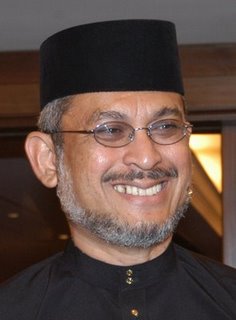
Y.B. Khalid Samad - a principled Malaysian leader (UPDATED)


(Photo of Y.B. Ir. Khalid Samad from here)

Never let it be said that there are no principled politicians in Malaysia. There is at least ONE, and his name is Y.B. Khalid Samad, M.P. for Shah Alam, and a member of PAS Central Political Bureau.

In the wake of the BN inspired cow's head incident, when our government ministers have chosen to defend bigots who threatened violence on their fellow Malaysians, our law enforcement has chosen to practice double standards, and BN's propaganda machine is working overtime to spin the story in their favour, Y.B. Khalid has chosen to stay true to his principles and values, even if it means losing in the next election.

Instead of doing what politicians do to stay "popular", i.e. pander to their "base", dog-whistling and engage in populist demagoguery, he has become (along with some very principled non-politicians and politicians) the voice of reason in a sea of intolerance and hate.

Here is his letter to the residents of Section 23, in full (from here):

Friday, September 4, 2009

Surat Terbuka Untuk Penduduk Seksyen 23

2hb September 2009 M
13 Ramadan 1430 H

السلام عليكم ورحمة الله وبركاته

Kehadapan penduduk Seksyen 23 yang dihormati,

Semoga surat ini menemui tuan-tuan dalam keadaan sihat wal afiat serta keimanan yang teguh dan jitu berkat bulan Ramadhan ini.

Saya mengambil kesempatan ini untuk mengingatkan diri saya serta tuan-tuan akan Firman Allah, Surah Al Maaidah ayat 8 yang bermaksud;
“Bertindak adil! Ianya lebih rapat dengan keTaqwaan.”
Semoga dalam usaha kita membina keTaqwaan dalam bulan Ramadhan ini, kita mengingati hakikat bahawa ‘keTaqwaan’ yang diusahakan itu mempunyai hubungan rapat dengan keadilan. Keadilan ini pula perlu dilaksanakan terhadap semua, walaupun terhadap yang tidak disenangi. Ini ditegaskan di dalam ayat yang sama yang bermaksud,

“dan jangan oleh kerana kebencian kamu terhadap sesuatu kaum menyebabkan kamu tidak berlaku adil…”
Kalau terhadap kaum yang dibenci sekalipun dituntut keadilan, apatah lagi terhadap jiran sekampung dan warga sekota? Walaupun mereka tidak sebangsa dan seagama, hakikatnya mereka tidak memusuhi kita atau memusuhi Islam. Maka, mereka layak mendapat layanan yang adil. Adakah adil sekiranya kita menafikan mereka hak tempat beribadat yang berhampiran dan sebaliknya memaksa mereka ke seksyen 22, di tengah-tengah kawasan Industri berat, jauh dari kawasan kediaman? Tiada apa di sana kecuali kilang-kilang.


Saya hanyalah seorang wakil rakyat yang dipilih oleh tuan-tuan melalui pilihan raya yang diadakan pada masa-masa tertentu. Saya tidak berhak memaksa apa-apa pandangan atau keputusan ke atas tuan-tuan semua. Saya hanya mengharapkan keputusan yang tuan-tuan rumuskan sendiri berhubung cadangan pemindahan kuil ke Seksyen 23 mengambil kira persoalan keTaqwaan dan keAdilan seperti di atas.

Islam adalah agama yang adil. Keadilannya mampu menawan hati semua manusia. Yang paling saya takuti adalah tindakan yang memberikan gambaran bahawa Islam adalah sebaliknya. Allah murka terhadap mereka yang bertindak dengan cara yang merosakkan imej Islam sehingga menyebabkan manusia terhalang untuk mengenali keadilannya. Allah berfirman ayat 94 Surah An-Nahl yang bermaksud:-
“Dan kamu ditimpa kehinaan kerana menjadi penghalang kepada jalan Allah (disebabkan tindakan buruk kamu) dan untuk kamu azab yang amat dahsyat (pada hari akhirat kelak)”
Ada yang bertanya kepada saya, tidakkah saya khuatir saya kalah dalam Pilihan Raya yang bakal tiba oleh kerana isu ini. Bagi saya sekiranya itulah kehendak pengundi, apakan daya? Yang penting sejarah akan menjadi saksi bahawa ada Ahli Parlimen dari parti Islam yang memperjuangkan keadilan untuk semua walaupun orang Hindu. Seperti kisah seorang raja Islam di Mysore, Bangalore, India pada abad ke 18 yang bernama Sultan Fateh Ali Khan Tippu (Tippu Sultan). Rakyatnya terdiri daripada orang Islam, Hindu dan Sikh. Hingga ke hari ini rakyat India masih menceritakan mengenai pemerintahan beliau yang berasaskan Islam sebagai sebuah pemerintahan yang adil.


Semoga Allah memberkati kita semua dan memimpin kita ke jalan yang diRedhaiNya.

وسلام عليكم و السلام على من التبع الهدى
YB KHALID BIN ABDUL SAMAD
Ahli Parlimen Shah Alam


Reading his letter, what are the principles and values that we can see him hold dear? I can see him uphold justice, fairness, equality, inclusiveness and acceptance of diversity, civility, good neighbourliness, empathy and humility. These are the very values that we need if we are going to rid Malaysia of racism, bigotry, corruption, oppression, bad governance and tainted judiciary.

Y.B. Khalid has shown himself to be one person who is truly worthy of the title "Yang Berhormat". Such people are more than mere politicians; they are leaders, and statesmen. Long may he lead us, and may Malaysia be blessed with more citizens such as he. If you appreciate his principled stand, and would like to encourage and support him, please consider sending him a message at his blog here.

Sincerely,
Malaysian Heart

UPDATED: Please read this excellent article on Y.B. Khalid at "Saya Anak Bangsa Malaysia". He/she writes: "Inilah bakal pemimpin Malaysia yang akan membawa Malaysia ke arah perpaduan." I concur.

Thursday, September 3, 2009

Let’s stamp out racism - article by Azmi Sharom in the Star

Dear Readers,

This is an excellent article by Dr. Azmi Sharom, an associate professor in the Faculty of Law at Universiti Malaya, which was published in the Star today:

Thursday September 3, 2009

Let’s stamp out racism

BRAVE NEW WORLD
By AZMI SHAROM

Not only must we condemn the cow-head protest in Shah Alam last week but we must look into ourselves and make sure we don’t think and speak like racists.

THE cow-head protest in Shah Alam last week left me feeling utterly disgusted. The men who organised and participated in that foul act are nothing but rank racists, and by cloaking their activities in a veil of piousness they show themselves to be even more despicable.

Yes, I was furious, but sadly I was not surprised. How can I be and how can anyone else be? We have allowed racists to have their way for so many years now.

Their appalling words and actions get progressively bolder and it just builds and builds until we have these men feeling they have the right to insult another religion in the most vile and brutal manner.

In the light of how Malay and Islamic supremacist thinking and expression have caught hold in the last few years, this sickening behaviour is simply a natural progression.

It happened because we allowed it to happen. Those bigoted thugs did what they did because we did not stamp down on the racists among us hard.

We allowed racist politicians to spout their garbage about “immigrant races”; we allowed them to tell our brothers and sisters to “go back to where you belong”; we allowed them to wave weapons of war; and we allowed them to ask for the weapons to be bathed in blood.

It’s too late for any politician to condemn something now when all the other acts of bigotry that have been brewing in the past few years were not even protested against because they suited their political needs.

It is too late to be making pleas of unity on National Day when not enough has been done before.

Let’s look at something recent. Two books that attacked the Mentri Besar of Selangor and Opposition Leader Anwar Ibrahim are blatantly racist.

They claim that Selangor is for Malays only. They claim that the Pakatan Rakyat state government threatens Malays because they hire non-Malay staff.

In other words, the government must only hire Malays so that only Malays get benefits from the government. This is racism pure and simple. But because it suits the ruling party, as these books attack Pakatan, nothing is said.

Racism is racism, be it some vile words published in some cheap self-published drivel, or a bleeding cow head stomped and spat upon. Racism is racism and it must be fought.

When it is not fought, when it is not faced down every single time, then those without the courage to fight it are merely accomplices who, through their cowardice or selfishness, support it.

And how should we fight it? The law that should be used is the Penal Code. The Sedition Act is a blunderbuss of a law and could be used against genuine dissent as well. Let us not look to that archaic leaving of the British.

Use the provisions in the Penal Code that make incitement an offence. Charge these people under the Penal Code and lock them away.

But that is for the authorities to do, if they so choose to. We, the people, must look into ourselves and make sure we don’t think and speak like racists. We must be even more careful that we do not infect our children.

We should speak out against racism and we should tell our political leaders that if they do not fight racism then they are supporting racism and we will not support them.

We must make sure that what happened in Shah Alam faces utter and complete public contempt. Only in that way can we ensure it is not repeated.

Dr Azmi Sharom is a law teacher. I fully subscribe to and support his views expressed here.

You can read more about Dr. Azmi here, here and here.

Dead cow heads vs. dead political aides?

In response to a post on Malaysia Today titled "Cow’s Head, Pig’s Head, Chicken’s Head and next?" (taken from the Kadayan Journal), a regular MToday contributor and commentator, who uses the handle "batsman", posted the following:
written by batsman, September 03, 2009 09:10:09
Are we now more concerned over assaulted dead cow he*** than assaulted dead political aides?
This is my response to him, which I have posted there:

Batsman wrote: "Are we now more concerned over assaulted dead cow he*** than assaulted dead political aides?"

The cow head incident is cause for deep concern, because:

1) The protesters (in no uncertain terms) threatened violence and bloodshed to solve their "grievances". This could well become a new trend in Malaysia.
2) Their actions were quite obviously done with the intention of insulting the culture and religion of some Malaysians.
3) Such an intention to insult could have been followed by an (equally planned?) reaction which would have played into Umno/BN's hands, by allowing them to justify continuing their high-handedness and unjust laws.

It is made even more serious by the apparent fact that they have been aided and encouraged by our Umno/BN government. It must be seen in the context of Umno/BN's larger strategy of:
1) destabilising PR state governments, to precipitate a BN takeover,
2) causing racial and religious hatred, distrust and fear, so that Malaysians will stop working with each other on issues of national importance, and instead get in line behind the BN party representing their respective race.

To think that it is only about the life or death of a cow is extremely shortsighted and lacking in intelligence.

If Malaysia is to have any hope of being liberated from BN's rule, people and groups who profess to work to that end need to be able to work together on multiple issues, without having petty arguments over which is more worthy of concern. United we stand, divided we live [and die] with BN in power for another 52 years.

(For the record, I believe that it's people who feel insulted, not religions per se. However, people's reactions need to be considered and taken into account)

Blogger's code of ethics

Blogger Nobisha of Bicara Nobisha, has posted an entry that I believe proposes what the Malaysian blogosphere badly needs: a blogger's code of ethics. In his latest post titled "10 BLOGGERS CODE OF ETHICS", this is what he writes:
  1. I will tell the truth.
  2. I will write deliberately and with accuracy.
  3. I will acknowledge and correct mistakes promptly.
  4. I will reply to emails and comments when appropriate, and do so promptly.
  5. I will strive for high quality with every post – including basic spellchecking.
  6. I will stay on topic.
  7. I will ensure that entries, quotations, headlines, photos and all other content do not misrepresent.
  8. I will disagree with other opinions respectfully.
  9. I will recognize that private people have a greater right to control information about themselves than do public officials and others who seek power, influence or attention.
  10. I will abide by the same high standards to which I hold others.
In a reply I posted there, I suggested adding the following two clauses:
- I will disclose conflicts of interest. (from here)
- I will use honest arguments & never resort to crooked thinking and dishonest tricks. (from here)

Overall, I think this is a great idea. As I have written about before, I believe that the Malaysian blogosphere is becoming a seedy back alley for spreading bigotry, with spin, smear, insinuation and dishonest arguments; all done for partisan interests.

Democracy needs a forum for open minds to honestly discuss and debate issues of National interest, as we work towards a Malaysia that is free from racism, bigotry, corruption, oppression, bad governance and tainted judiciary. Bigotry, on either side of the political divide, will destroy our blogosphere; it has already infected our mainstream media and blighted inter-community relations in the past, with dire consequences. If we care for our Nation's future, we need to reclaim this space for enlightened public discourse.

All of us have our own political beliefs and affiliations, there's nothing wrong with that. However, whatever those beliefs are, we have a responsibility to argue our cases justly and honestly.

What do you think? Will our blogosphere benefit from such a code of ethics?

Sincerely,
Malaysian Heart

Wednesday, September 2, 2009

Happy Onam to all!

Today, 2 September 2009, is Onam, the biggest and most significant festival celebrated by Malayalis around the world. What's the story behind this festival? From here:
A long long time ago, an Asura (demon) king called Mahabali ruled Kerala. He was a wise, benevolent and judicious ruler and beloved of his subjects. Soon his fame as an able king began to spread far and wide, but when he extended his rule to the heavens and the netherworld, the gods felt challenged and began to fear his growing powers. Presuming that he might become over-powerful, Aditi, the mother of Devas pleaded with Lord Vishnu to curtail Mahabali's powers.

Vishnu transformed himself into a dwarf called Vamana and approached Mahabali while he was performing a yajna and asked for alms. Pleased with the dwarf brahmin's wisdom, Mahabali granted him a wish. The Emperor's preceptor, Sukracharya warned him against making the gift, for he realized that the seeker was no ordinary person. But the Emperor's kingly ego was boosted to think that God had asked him for a favor. So he firmly declared that there is no greater sin than going back on one's promise. He kept his word.

The Vamana asked for a simple gift — three paces of land — and the king agreed to it. Vishnu in the guise of Vamana then increased his stature and with the first step covered the sky, blotting out the stars, and with the second, straddled the netherworld. Realising that Vamana's third step will destroy the earth, Mahabali offered his head as the last step.

Vishnu's fatal third step pushed him to the netherworld, but before banishing him to the underworld Vishnu granted him a boon. Since he was attached to his kingdom and his people, he was allowed to return once a year from exile. Onam is the celebration that marks the homecoming of King Mahabali. It is the day when a grateful Kerala pays a glorious tribute to the memory of this benign king who gave his all for his subjects.

Another Legend
Another legend has it that King Mahabali was a devout worshipper of Lord Vishnu. He was sincere, honest, just and a good ruler. But he had one weakness — ego. And to eradicate his pride and redeem his beloved devotee of this one sin, Vishnu came to earth in the form of a dwarf Brahmin named Vamana.

The king in his pride asked the Brahmin what he wanted for he could give anything. Vamana asked for three paces of land and the king agreed. To humble him Vishnu, as Vamana showed Mahabali that he is just a puny creature in front of God's universal stature.

Mahabali, who was a man of principles, realized God's purpose and offered his head for Vamana's footstep, as he was sent to another world. This fatal step proved a blessing in disguise for the good king — the foot salvaged and released him from the recurrent cycle of birth and death. That is why Onam is celebrated by wearing new clothes and resolving to lead a new life of truth, piety, love, and humility.

In Malaysia, this is how Onam is celebrated (from here):
The first day begins with members of the family having a bath. However, unlike other communities, the Malayalees do not have an oil bath.

Nambiar said oil is used for cleansing purposes so the people in Kerala have an oil bath every day except on auspicious days.

After this, a unique Kolam (colourful design) made from fresh flowers called Pookalam is placed in front of the house. Since it is the harvest festival, the state of Kerala is a riot of colours as the fields are golden and full of fruits and flowers.

“Each day more flowers are added to the Pookalam. Women use different colours of the same flower or different flowers to brighten the kolam,” he said.

He added that the Pookalam would be placed on sand so each day the ladies would sprinkle water on the flowers to keep them fresh.

A replica of King Mahabali called the Matheva is placed in the centre of the Pookalam. They do this in the hope that Mahabali would be pleased with their efforts and greetings.

Most important is the Onasadya or a feast comprising of vegetarian dishes for everyone.

Onam also means new clothes for everyone in the family and most times it would be traditional outfits.

The women and the men wear an interesting costume called the Mundu.

The Mundu is two pieces of white material with interwoven gold threads and the women wear them with the auspicious gold, red or yellow blouses. People also refrain from wearing black.

They also refrain from sweeping the house and gifts are given to workers and labourers in the farm.

In Malaysia, since most Malayalees do not have holidays for Onam, the celebration is held on the weekend closest to Onam.

The local Kerala associations or samajams hold special events for members in their respective states.

Malaysians would have the onasadya (feast) at home or even at the samajams.

Some of the most important dishes are rice, sambhar, avial, pulicherry, kalan, olan, upperi, meerku varati and savoury inji puli.

“Since it is the harvest festival, the dishes will definitely have rice. Usually the samajams will also organise lunches and usually it would be pot luck,” he said.

There must also be two sweet desserts called payasam which come in two colours, the dark payasam (prathaman) and white payasam (velethe payasam).

All over Malaysia, the samajams would organise cultural performances by local talents. Among the Kerala art forms presented here are Onnamthullal, Kaikotti Kali and Mohini attam.
Wishing Thiruonam Aashamsakal to all!

Sincerely,
Malaysian Heart

P.S. You can read more about Onam here and here.

Monday, August 31, 2009

After 52 years of independence, we need a declaration of INTERdependence

After 52 years of independence, it is no exaggeration to say that inter-ethnic and inter-religious relations in Malaysia are in a bad state. Recent events such as the cow head incident in Shah Alam only serve to underscore what Malaysians know to be true.

However, Malaysian inter-ethnic and inter-religious relations have never been very good, and have been dragging us down for some time. I believe that this is due to our system of government; although we claim to be a democracy, the reality is that all this while we have been run as a consociationalism. Under this form of government, it is accepted belief that the people from various groups cannot work together in a normal democratic process, and the elites of each group are ones who need to bargain with each other behind closed doors to decide on how to run the country, and who gets what.

The consequences of this system in Malaysia has been that, freed from having to be accountable to the rakyat, the elites (i.e. Umno, MCA, MIC etc.) have been able to indulge in corruption, cronyism and nepotism with impunity, thereby concentrating power and wealth in their hands.

Another consequence is that there has been no real public discourse on matters of national interest. Indeed, discussion of key topics is deemed "sensitive" and clamped down upon. The threat of violence, either official or unofficial, has been used to prevent this discourse. The rakyat have kept divided by the elites in order to protect their grip on power; playing the politics of communalism has succeded to an extent in getting each group to identify with the elites who "represent" them.

We can see why while neighbours and colleagues from different groups may form friendships and close relations, there is no real understanding between groups. Acceptance of each other has not become part of the collective consciousness; the "muhibbah" planned and organised by elites remains superficial, and barely limited to tolerance.

In this way, inter-ethnic and inter-religious relations have been held hostage to the political interests of the various elite parties in Malaysia. It is no coincidence that inter-ethnic conflict has flared whenever the elites find their monopoly on power threatened: in 1969, 1987 and 2001. In the sensational Utusan Malaysia and Berita Harian articles, chauvinistic posturing by BN leaders, and most recently, the cow's head procession, I believe that we are seeing BN trying to repeat its so far very successful use of communal politics, this time to gain an advantage in the post GE-12 scenario.

Is there something that we Malaysians can do to once and for all remove this knife that BN is holding to our throat? 64 years ago, the philosophers Will and Ariel Durant (the husband and wife authors of the magnum opus, The Story of Civilization), along with some like-minded people, pondered the same problem. The world had just survived a world war in which racial intolerance and hatred played a large part, with millions dead. How could civilisation be protected from once again suffering the brutality and violence of dictatorship and demagoguery?

They decided that the best way was to form a movement to promote human tolerance and fellowship through mutual consideration and respect. In the words of Will Durant, "no democracy can long endure without recognizing and encouraging the interdependence of the racial and religious groups composing it." They came up with a Declaration of INTERdependence, which represented their core beliefs. This is the entire text of the declaration at present:
Declaration of INTERdependence

Human progress having reached a high level through respect for the liberty and dignity of men, it has become desirable to re-affirm these evident truths:
  • That differences of race, color, and creed are natural, and that diverse groups, institutions, and ideas are stimulating factors in the development of man;
  • That to promote harmony in diversity is a responsible task of religion and statesmanship;
  • That since no individual can express the whole truth, it is essential to treat with understanding and good will those whose views differ from our own;
  • That by the testimony of history intolerance is the door to violence, brutality and dictatorship; and
  • That the realization of human interdependence and solidarity is the best guard of civilization.
Therefore, we solemnly resolve, and invite everyone to join in united action.
  • To uphold and promote human fellowship through mutual consideration and respect;
  • To champion human dignity and decency, and to safeguard these without distinction of race, or color, or creed;
  • To strive in concert with others to discourage all animosities arising from these differences, and to unite all groups in the fair play of civilized life.
ROOTED in freedom, bonded in the fellowship of danger, sharing everywhere a common human blood, we declare again that all men are brothers, and that mutual tolerance is the price of liberty.

----------------oooOOOooo----------------

I believe that if Malaysians realize that all of us are interdependent, and if we practice the principles of this declaration, we will achieve the following:
  • Build real understanding and trust between ethnic and religious groups in Malaysia
  • Build the foundations for real dialogue and discourse on matters of national interest, including "sensitive" ones
  • Prevent attempts by political parties to use communal politics to divide and rule over Malaysians
  • Be able to tackle corruption, cronyism and nepotism and promote good governance without being accused of ethnic and religious bias
  • MOST IMPORTANTLY, free ourselves from the constant implied threat of politically sanctioned violence and chaos when we attempt to build a Malaysia that is truly free, just and democratic.
If you feel that this declaration is something that can help us Malaysians, would you consider helping to spread its message? We could blog about it or share it with our family, friends and colleagues. Perhaps the best thing we could do is to practice it in our daily lives. In the words of Will Durant:
"Our main task is to reduce the causes of racial animosity. First by recognizing that we are all guilty. Which of us has never uttered a word of racial hositility? Let us resolve never to do it again. Let us watch our own conduct, and by our moderation, our modesty, our good will, give no handle or excuse to racial division. Let us burn the second half of this Declaration into our hearts, and make a sacred vow, here and now."
Are we up to it?

Sincerely,
Malaysian Heart

P.S. Thanks to Fisha of Dream a Little More Dream, for first making me aware of the life and work of Will and Ariel Durant. To participate in the international signature campaign, please visit this webpage.

Wednesday, August 26, 2009

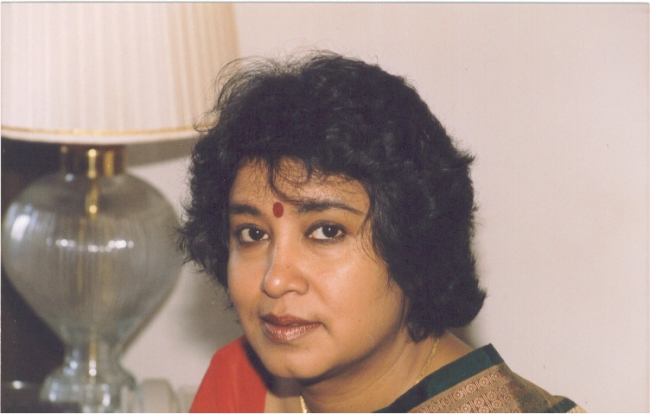
Happy Birthday, Dr. Taslima Nasrin


(Picture of Dr. Nasrin taken from here)

Yesterday (25 August 2009) was the birthday of Dr. Taslima Nasrin, the controversial Bangladeshi physician turned author, and feminist and human rights activist, who works to build support for secular humanism, freedom of thought, equality for women, and human rights by publishing, lecturing, and campaigning.

From Wikipedia:
Nasrin started writing poetry when she was thirteen. While still at college in Mymensingh, she published and edited a literary magazine, SeNjuti ("Light in the dark"), from 1978 to 1983. She published her first collection of poems in 1986. Her second collection, Nirbashito Bahire Ontore ("Banished within and without", 1989) was a big success.[citation needed]. She succeeded in attracting a wider readership when she started writing columns in late 1980s, and then novels, for which she has won significant acclaim.[20] In the early 1990s, she began writing novels. In all, she has written more than thirty books of poetry, essays, novels, short stories, and memoirs, and her books have been translated into 20 different languages.
Even if one does not agree with everything that she has written, one can still respect her for her courage and principles. Whatever our own beliefs are, we must all defend, to the death, her right to free speech. In her own words:
Freedom of expression for some is not enough.
We must work for freedom of expression for all.

Human rights for some is not enough.
We must work for the human rights for all.

Peace for some is not enough.
We must work for peace for all.

I, come what may, will not be silenced.
Come what may, I will continue my fight for equality and justice without any compromise until my death.

Come what may, I will never be silenced.

And so must we.

Happy Birthday, Dr Nasrin! May you be happy and have peace wherever you are!

Sincerely,
Malaysian Heart

P.S. You can read the first part of her autobiography, My Girlhood, here, and the second part, My Stormy Youth, here. You can send her a birthday message on her Facebook page, here, and read more about her work here.

P.P.S. Here is a blog by Tamoso Deep, a fan of Taslima Nasrin.

Friday, August 21, 2009

Ramadan Mubarak to all!


Ramadan al-Mubarak is the holiest month of the Islamic calendar, when Muslims fast by refraining from eating, drinking, sexual conduct, smoking, and indulging in anything that is in excess or ill-natured; from dawn until dusk, and are to be especially mindful of other sins. Fasting, one of the Five Pillars of Islam, is meant to allow Muslims to seek nearness to Allah, to express their gratitude to and dependence on Him, to atone for their past sins, and to remind them of the needy. They are also expected to put more effort into following the teachings of Islam by refraining from violence, anger, envy, greed, lust, harsh language, gossip and to try to get along with people better than normal. In addition, all obscene and irreligious sights and sounds are to be avoided.

As narrated by Abu Huraira: Allah's Apostle said, "When the month of Ramadan starts, the gates of the heaven are opened and the gates of Hell are closed and the devils are chained." (Sahih Bukhari, Volume 3, Book 31, Number 123)

This year in Malaysia, the Ramadan fast begins tomorrow, Saturday, 22 August 2009.

Some verses from the Holy Quran pertaining to Ramadan and fasting:
O ye who believe! Fasting is prescribed to you as it was prescribed to those before you, that ye may (learn) self-restraint,-

(Fasting) for a fixed number of days; but if any of you is ill, or on a journey, the prescribed number (Should be made up) from days later. For those who can do it (With hardship), is a ransom, the feeding of one that is indigent. But he that will give more, of his own free will,- it is better for him. And it is better for you that ye fast, if ye only knew.

Ramadhan is the (month) in which was sent down the Qur’an, as a guide to mankind, also clear (Signs) for guidance and judgment (Between right and wrong). So every one of you who is present (at his home) during that month should spend it in fasting, but if any one is ill, or on a journey, the prescribed period (Should be made up) by days later. Allah intends every facility for you; He does not want to put to difficulties. (He wants you) to complete the prescribed period, and to glorify Him in that He has guided you; and perchance ye shall be grateful.

When My servants ask thee concerning Me, I am indeed close (to them): I listen to the prayer of every suppliant when he calleth on Me: Let them also, with a will, Listen to My call, and believe in Me: That they may walk in the right way.

Permitted to you, on the night of the fasts, is the approach to your wives. They are your garments and ye are their garments. Allah knoweth what ye used to do secretly among yourselves; but He turned to you and forgave you; so now associate with them, and seek what Allah Hath ordained for you, and eat and drink, until the white thread of dawn appear to you distinct from its black thread; then complete your fast Till the night appears; but do not associate with your wives while ye are in retreat in the mosques. Those are Limits (set by) Allah: Approach not nigh thereto. Thus doth Allah make clear His Signs to men: that they may learn self-restraint.


Surah Al-Baqarah, verses 183 - 187, translated by Hafiz Abdullah Yusuf Ali
Wishing a Blessed Ramadan to all!

Note: If you would like to learn more about Ramadan and fasting in Islam, this website has some information for you.

Thanks to A.A. for all the help!

Saturday, August 1, 2009

For the Anti-ISA Protestors: Abou Ben Adhem by Leigh Hunt


(photograph from GMI's blog)

The current situation in KL, with some Malaysians willing to threaten and intimidate other Malaysians with violence just to prevent them from exercising their right to free speech and peaceful assembly, fills me with deep concern. If we care about our rights and freedoms, and for a Malaysia that is free from unjust laws, violence and thuggery, we must effectively oppose groups like Pewaris.

I will write more about how groups like Pewaris are a threat to our freedom and democracy. Until then, I'd like to share with you this poem by Leigh Hunt. It is one of my all-time favourites, and I humbly dedicate it to the Gerakan Mansuhkan ISA (GMI), and all who join in their protest today. May all who are unjustly detained without trial get the justice they deserve.

Abou Ben Adhem
by Leigh Hunt

Abou Ben Adhem (may his tribe increase!)
Awoke one night from a deep dream of peace,
And saw, within the moonlight of his room,
Making it rich, and like a lily in bloom,
An angel writing in a book of gold:-

Exceeding peace had made Ben Adhem bold,
And to the presence in the room he said,
'What writest thou?' - The vision raised its head,
And with a look made of all sweet accord,
Answered 'The names of those who love the Lord.'

'And is mine one?' said Abou. 'Nay, not so,'
Replied the angel. Abou spoke more low,
But cheerly still; and said 'I pray thee then,
Write me as one that loves his fellow-men.'

The angel wrote, and vanished. The next night
It came again with a great wakening light,
And showed the names who love of God had blessed,
And lo! Ben Adhem's name led all the rest.


Please support the Gerakan Mansuhkan ISA in their struggle for Justice.

Leigh Hunt based the protagonist in this poem on the legend of Ibrahim Bin Adham, the 8th century Sufi mystic. According to the legend, as described by Rumi in his famous Masnavi, he was the ruler of Balkh, who abandoned the throne to become a zahid.

Hunt also seems to have been inspired by the Islamic belief of Lailatul Bara'ah (or Nisfu Syaaban, as it is referred to in Malaysia). On this night it is believed that the records of our deeds during the past year will be collected, and a new "book" opened. This year, it falls on the evening of Wednesday, 5th August 2009, in four days time. This webpage has information about it.

God knows best.

Sincerely,
Malaysian Heart